Welcome To Our New Website. As We Fine Tune It, Please Feel Free To Reach Out To Us Directly If You Have Questions or Need Help Placing An Order.

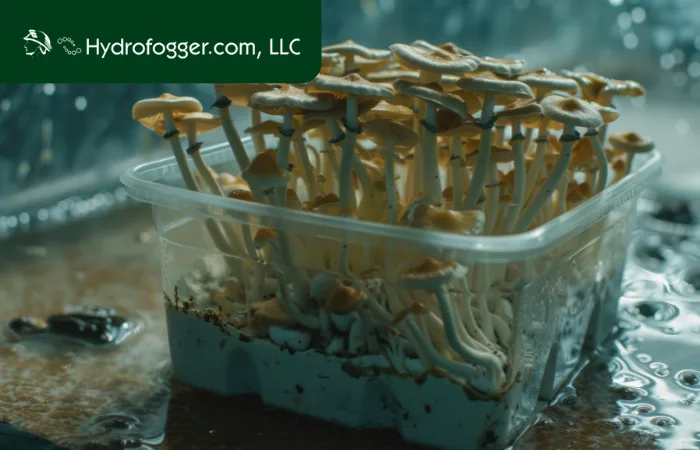
The humidity is the most important factor in mushroom cultivation. Mushrooms get moisture from the air, not through the roots. With the correct humidity, the crop will be healthy, have the right shape, and be of good quality. A few weeks of cultivation can be destroyed by the wrong humidity. By their very nature, mushrooms live in damp, dark places and are kept wet by their environment. Growing indoors is a way to create the same conditions, but with very precise humidity control. If the air is constantly moist, then the mushrooms will be able to absorb water. In such an environment, they can grow in the correct way.
In this blog post, we will discuss why proper humidity for growing mushrooms is a must.
Mycelium is the web-like structure found underground. This is responsible for the growth of mushrooms. This web subsequently goes through the substrate before any mushrooms appear. Additionally, mycelium requires well-balanced and humid conditions to be able to colonize the substrates. When the air is dry, the substrate also becomes dry. This slows the growth of mycelium.
Conversely, too much moisture without proper ventilation is also not an ideal condition for growing mushrooms. It can cause the growth of unwanted molds. It is through constant humidity that mycelium is kept alive, energetic, and evenly spread. Healthy mycelium is equal to more pins and higher yields.
Pinning is the period when small mushroom buds appear. It is very sensitive to the slightest changes in the environment. High humidity is the main factor that tells mushrooms that the conditions are good for them to fruit.
In general, the majority of mushroom species require humidity levels of more than 85% during pinning. When the air is dry, pins can shrink or stop developing altogether. Continuous humidification will provide the most efficient protection to pins against dehydration. So, pinpointing success is to a great extent a matter of perfect humidity for growing mushrooms and control.
As a matter of fact, the water requirement for mushrooms will be doubled as they go to maturity. To be precise, fruiting mushrooms are made up of very high percentages of water. When they are exposed to dry air, they lose their moisture very quickly. Analogously, humidity between 85 and 95% is the best condition for the complete unfolding of the mushroom cap.
On top of that, the cracking and twisting of the mushroom surface may happen if the humidity fluctuates. Apart from that, stable humidity not only ensures the full mushroom size but also the good quality of the mushrooms.
This is one of the most common problems. Dry air will take the water directly from the mushrooms that are still growing. Consequently, growth slows down significantly, and the mushrooms' structure becomes weak. You may spot the splitting, curling, or stopping of growth of the caps as some of the symptoms.
Moreover, the stems may be thin and weak under dry conditions, and they will probably remain that way. Besides that, low humidity will have the effect of reducing the total harvest weight by half. So, it is necessary to maintain a moderate moisture level. It will stop unnecessary yield losses.
Click here for related blog posts.
Moisture is a must for growing mushrooms. But in excess, it can cause problems. Excessive humidity without airflow leads to the creation of stagnant conditions, which are not suitable for growing. Stagnant air is very favorable for mold, bacteria, and other forms of contamination of the surface. Spores and diseases can be caused by water droplets that settle on the caps.
These risks are prevented by balanced humidity, together with the supply of fresh air. Controlled environments support the growth of healthy mushrooms without any contamination problems. That’s why controlling humidity for growing mushrooms is a must.
Manual misting is quite inefficient in maintaining a consistent level of humidity. A mushroom humidifier effectively automates moisture control inside the grow spaces. These systems atomize the fine mist particles from the water and release them into the air. The mist particles raise the humidity without oversaturating the substrate.
A mushroom humidifier keeps the conditions stable all day long. Automated systems greatly reduce the labor and human error that are usually involved. They allow growers to concentrate more on monitoring than on the constant spraying work.
The size of the grow room determines the kind of humidifier that would be ideal. Small growing setups would generally be equipped with ultrasonic humidifiers. Larger rooms, on the other hand, take advantage of fogging systems that have higher output capacity. The proper distribution of the fine mist guarantees that humidity is evenly spread throughout the growing spaces. By choosing good equipment, one can ensure the success of the growing process in the long run.
Use clean or filtered water in humidifiers. Mineral-rich water may cause the misting components to be clogged gradually. Proper maintenance allows for continuous humidity output every day. Reliable systems lessen the trouble of downtime during the stages of the most critical growth.
The right humidity for growing mushrooms directly affects the overall success of the cultivation. It favours the growth of the mycelium, the formation of pins, and the development of fruiting. A controlled moisture level avoids the appearance of defects, contamination, and the loss of yield. The use of a reliable humidifier is the best way to guarantee a constant moisture of the air. Good and stable humidity will increase the size, the quality, and the regularity of the harvest of the mushrooms.
For the next level of humidification and professional support, get in touch with Hydrofogger. Contact us for any further assistance.
Yes. Balanced humidity helps mushrooms respond better to light cues during fruiting.
Stable moisture levels support regular flush cycles and predictable harvest timing.
Yes, unmanaged moisture can cause corrosion or buildup inside grow room equipment.
Absolutely, consistent humidity reduces mistakes and improves early growing success.
Yes, simple humidity management helps protect crops during dry or windy weather.


Stay updated with the latest news, tips, and exclusive offers by subscribing to our newsletter! Join our community to receive valuable insights directly in your inbox. Don't miss out—sign up today and enhance your experience with us!